Most commercial banks would say they have a commitment to local leadership and to service to their community. However, each bank must always be looking to its own future and considering what a successful transition of institutional leadership will require. A bank’s skill in their own succession planning must always remain center stage.
A bank truly committed to its community will know what it takes to ensure its own continuity, stability and growth. A measure of a bank’s endurance will surely be its understanding of its own true legacy in the community it has served. However, how the bank prepares the next generation of its leaders to take the institutional helm will determine its relevance and endurance.
Early identification and development of talent
Succession planning is not a reactive process; it requires foresight and proactive engagement.
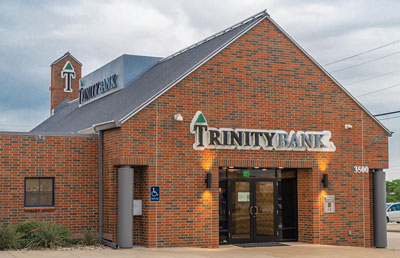
The skilled leadership and staff of Trinity Bank have navigated the growth of North Texas for more than two decades, providing our business clients with the worldview of a federally regulated bank and the knowledgeable local customer service that understands and meets the unique community needs of our region, its commercial innovators and its vibrant, growing communities.
Financial institutions like ours identify potential bank leaders early in their careers and guide them along the way, benefiting the institution for decades. As part of Trinity’s succession planning, we have designed and deployed durable, agile development programs that equip our emerging leaders with skills and knowledge that are competitive and necessary to continue our customized service to clients and community.
Transparent communication and stakeholder involvement
We also give critical priority to sustaining open communication channels with all stakeholders, including shareholders, board members, employees and clients.
Trinity Bank worked to keep all stakeholders apprised and up-to-date through frequent written correspondence, and in-person meetings regarding the progress of the bank’s succession plan. The communication process remained central to launching specific goals and commitments as much as five years before the formal execution of the plan.
When we engage stakeholders in open discussions about the future leadership of Trinity Bank, we ensure that everyone is on the same page, our goals are supported by all and that all stakeholder interests are properly protected.
Preserving our vision and values
Succession planning is also about preserving an institution’s values, culture and vision. Leaders — especially those who have earned their new role — should embody principles that have guided their institution since inception.
Simple values include knowing customers by name, understanding important aspects of their business customer’s goals and quick response times to customers who request assistance.
Successful succession planning is about more than just filling positions; it’s about ensuring the longevity and prosperity of an institution and the communities we serve.
By accomplishing a successful succession plan, the institution continues to serve the community and creates a win-win for all stakeholders.