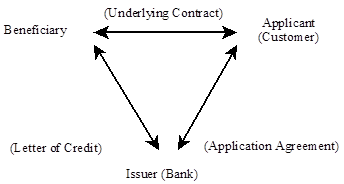
A letter of credit transaction involves three separate obligations. The real estate lender Bank is party to two of these obligations. The first contract is that between the Applicant (i.e. the borrower), on whose behalf the letter of credit is issued, and the Beneficiary. The second obligation is between the Issuer (i.e. the Bank) and the Beneficiary and provides that the Issuer will make payment to the Beneficiary upon demand or draft, as the letter of credit provides. See form of Irrevocable Standby Letter of Credit. Finally, a third contract is between the Issuer (i.e. the Bank) and the Applicant (i.e. the Borrower) and requires repayment by the Applicant of advances made by the Issuer under the terms of a letter of credit. See form of Irrevocable Standby Letter of Credit Reimbursement Agreement.
The rights and obligations of the Issuer and the Beneficiary under a letter of credit are independent of any of the rights and obligations imposed by the other contracts in this tripartite arrangement. The Issuer, for example, is in no way bound by the contract between the Applicant and the Beneficiary, even if a reference to this contract is included in the letter of credit.