A Lease or Memorandum of Lease filed in the Real Estate Records can be superior to a subsequent mortgage on the real property. The Lease may contain a subordination making it subordinate to a subsequent mortgage. Consult Bank counsel for review of the underlying Lease.
At a foreclosures sale on the real estate, the purchaser will still take “subject to” the lease (i.e., must honor terms).
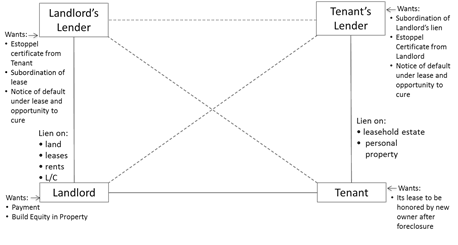
A Leasehold Subordination, Disturbance and Attornment and Estoppel Certificate is often used to document the agreement among the parties. A sample form appears at the end of this Chapter. In this document the parties agree to the following:
•Subordination: The Tenant acknowledges that the Lease is subordinate to Mortgage
•Non-Disturbance: The Landlord’s Lender/Mortgagee promises:
o Tenant (if in possession and not in default) will not be sued if the Mortgagor/Landlord is in default on mortgage loan.
o In the event of foreclosure, the successor landlord will be bound by the Lease.
o The Tenant Lender’s lien on the Tenant’s UCC collateral has priority over the Landlord’s Lien.
•Attornment: The Tenant will
o Give Mortgagee notice of default and right to cure Landlord’s breach of Lease.
o Upon foreclosure, will acknowledge (and pay) new owner.
•Estoppel: The Tenant acknowledges no current default by Landlord and in the future will be estopped from claiming defaults existed.
This is a recorded instrument between the Landlord, the Landlord’s Lender/ Mortgagee, and the Tenant (and could include the Tenant’s Lender)
The diagram below illustrates the competing interests among the parties where both the landlord and tenant are borrowers: